by VINETA ŠĶĒRĪTE
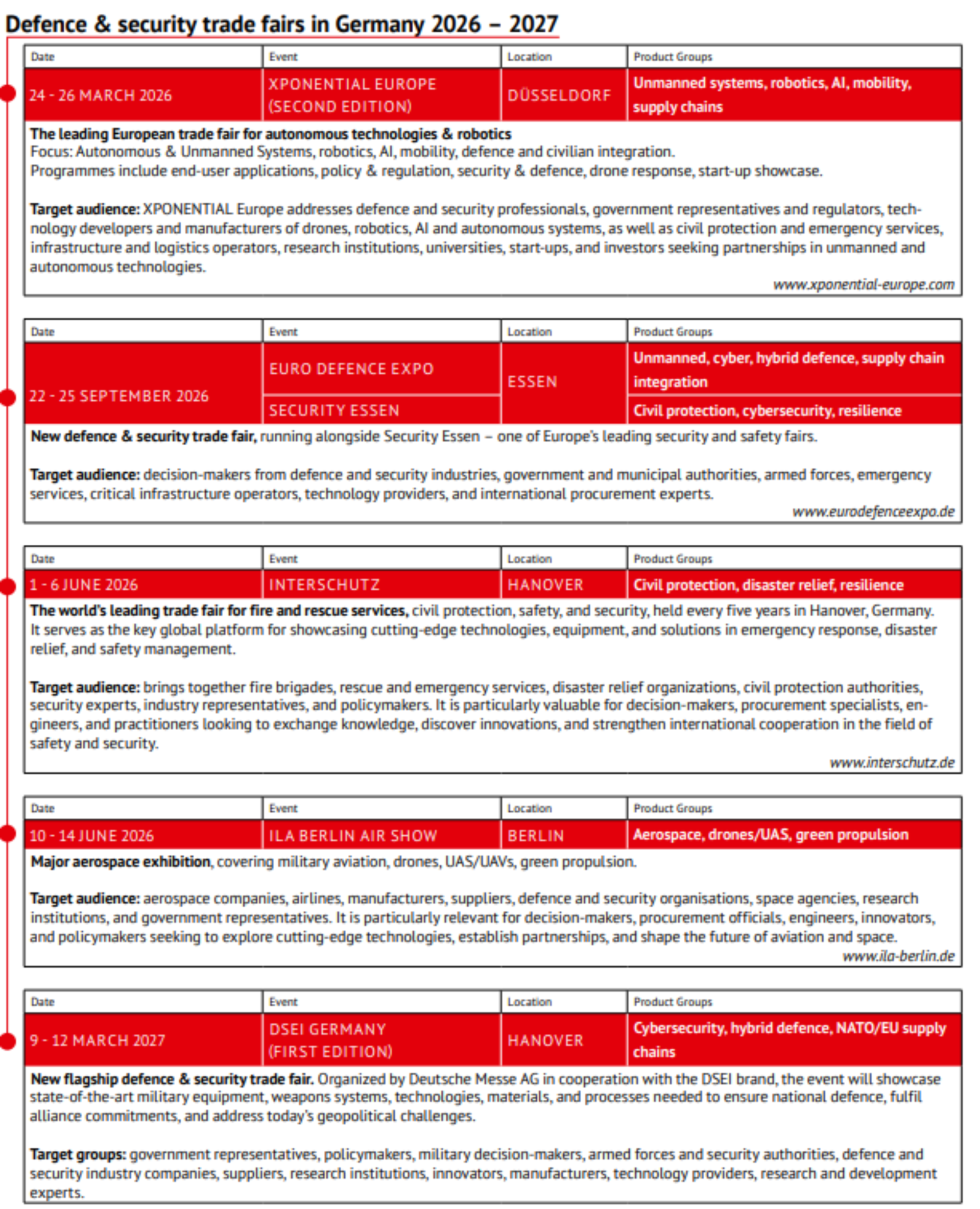
From drones to cybersecurity, Germany’s exhibitions are now the premier stage for showcasing innovation and forging global defence partnerships. Germany is situated at the heart of Europe’s exhibition industry. Every year, over 150 international trade fairs welcome more than 10 million visitors from across the globe. According to AUMA – the Association of the German Trade Fair Industry – nearly 60% of the world’s leading industry fairs take place in Germany. While long known for industrial engineering, logistics, and medical technology, German fairs today are increasingly shaped by the themes of defence, dual-use innovation, and security.
This shift is significant. Germany’s exhibition grounds have become more than “shop windows” – they are barometers of the industry and arenas of defence diplomacy, where generals, engineers, politicians, and entrepreneurs meet face-to-face. Düsseldorf, Berlin, Hamburg, and Hanover have turned into crossroads for the global security dialogue.
In these halls, defence manufacturers unveil their latest systems, cybersecurity pioneers present AI-powered solutions, and maritime experts explore resilience at sea. High-ranking officials use these events to forge alliances, compare strategies, and set the tone for Europe’s future security policy.
The range of topics has expanded rapidly. Autonomous and unmanned systems – from aerial drones to maritime robotics – now share the stage with AI-driven solutions that transform both military and civilian operations. Cybersecurity is a core theme, as governments acknowledge the risks of digital warfare. Civil protection and disaster management feature more prominently, reflecting the need for integrated responses to climate events, pandemics, and hybrid threats. And the green transition runs across all these areas: how to decarbonise fleets, use renewable fuels, and create energy-resilient bases.
For Baltic companies, this is a clear signal. German fairs are not just places to observe trends but to become part of them – to present solutions on the same stage as global leaders, position themselves in European supply chains, and show readiness to contribute to NATO and EU priorities.